Unconventional Design and the shift in Modern Branding
Read more
When Alpona Lent Itself to Brand Design: The Nirantara Story
Any Bengali woman knows the significance of Alpona in her life. A myriad of memories of tiny, bite-sized coconut laddoos (Narkol Naru), Saraswati Puja, Lakshmi Puja, and Bengal’s version of Rangoli, “Alpona” make it an integral part of any festival in Bengal. Intricate, looping continuous designs made with rice batter are mesmerising both in the process of creation and in the final result. This art form has always been part of my childhood and one of the very few things I carried with me into my non-Bengali household.
But learning Alpona as an art form from one of the leading professors of Santiniketan was a completely different experience. The design thinking that went into depicting everyday life and household rituals through symbolism, at its creative best, opened up the world of design around me in ways I had previously taken for granted.
Little did I know that this small, homely passion would become the starting point for a new brand identity project at Windowseat. The Alpona designs I created as part of my home assignments under a very fastidious online professor were, at times, brought to the office so I could sneak in moments to complete them.
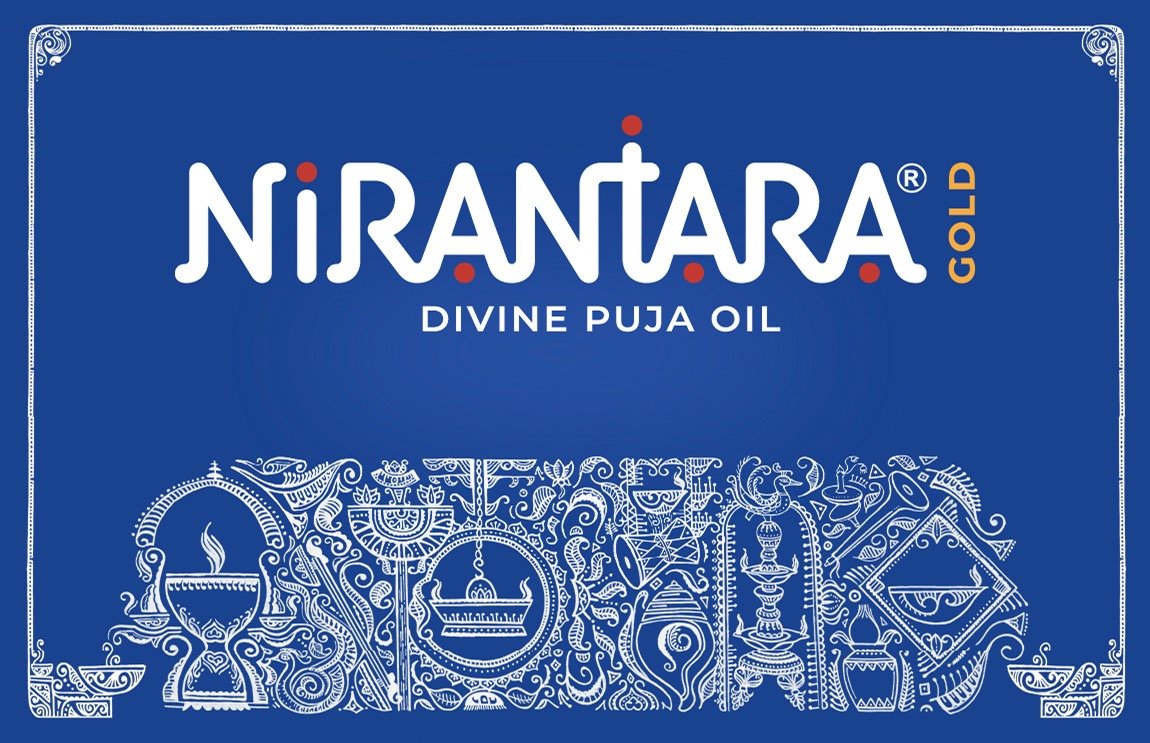
Our ECD, Santosh Thampi, an advertising agency genius with a keen eye for emerging ideas, recognised the potential of this art form and used it as the foundation for the brand identity of Nirantara oil, a challenger brand from Ulhas Agarbattis. Nirantara, a name that means continuous and unending, resonated deeply with the flowing, uninterrupted nature of Alpona and Rangoli designs, as he observed.
This marked just the beginning. The creative team went on to conduct extensive research into Alpona and Rangoli traditions across different regions of India, studying their cultural and religious nuances while identifying the artistic and symbolic commonalities they shared. This exploration led to a unique product and visual identity that embodied what the brand stood for, purity and tradition. In a highly cluttered diya oil market, both organised and unorganised, where purchasing decisions were largely driven by price rather than quality, Nirantara told a different story. The brand and its design language reflected the richness of our cultural heritage and its enduring presence in every home.
In a short span of time, I witnessed a familiar household art form like Alpona and Rangoli evolve into a distinctive brand and visual identity for Nirantara. Seeing the brand grow from zero to a ₹20 crore business and achieve record sales within just 6–8 months brought not only professional pride but also deep personal satisfaction and a stronger emotional connection to the brand.
“Design creates culture. Culture shapes values. Values determine the future.” – Robert L. Peters