When Alpona Lent Itself to Brand Design: The Nirantara Story
Read more
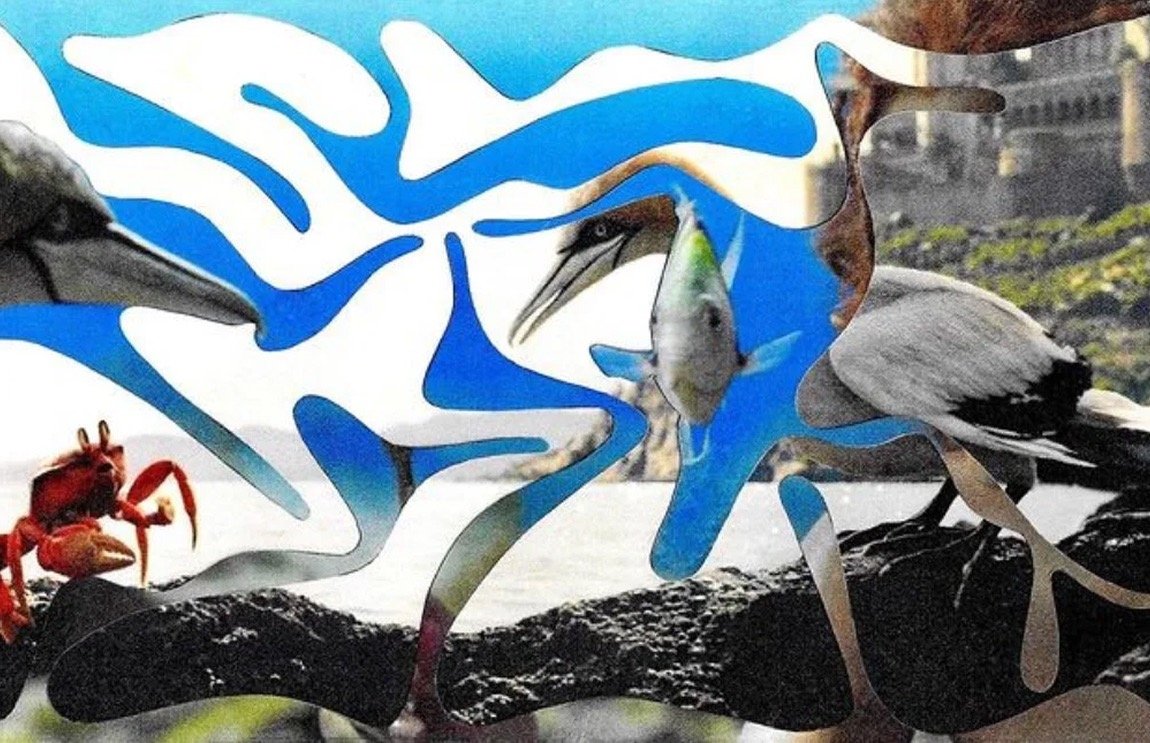
Photo Source - “Disney’s Little Memaid”- Ian Woods.
For a long time, good branding meant playing by the rules. Clean grids, tidy typography, and strict consistency were the safest ways of signalling credibility. That idea of professionalism still exists, but it no longer carries the same weight. More brands are now embracing visuals that feel gritty and more expressive. Collage, anti-design movements, and blueprint-style layouts are showing up more often as deliberate choices. They reflect how culture actually moves today: layered, fragmented, and constantly in flux.
Collage has become a way to bring handmade charm back into brand systems. It allows contrasting elements to coexist without feeling contrived. When executed well, it feels human and flexible. It indicates that the brand is open to influence instead of locked into a rigid identity. Through the exploration of collage, mixed-media pieces have come back to the forefront of contemporary design.
Anti-design is often misunderstood by traditional agencies. It is not about ignoring fundamentals, but about questioning a legacy system of “rules.” Awkward spacing or clashing colors are rarely accidents. They are, in fact, used to interrupt visual monotony and demand attention. The risk is real, but so is the impact when it aligns with a brand’s voice. In an increasingly polarised world, customers choose to align themselves with brands that reflect their individual philosophy, cultural identity, and interests. People have an innate desire to belong and to claim significance through shared identity and experience. These variables are constantly evolving, and over time it has become clear that the rulebook can only take you so far. Disruption is vital for any brand in a saturated market trying to make its mark. Quite frankly, which market isn’t? With every niche up for grabs and AI accelerating brand development, we are in an era of overwhelming choice.
A large portion of the design and commercial media industry is indeed pivoting to AI, primarily due to cost efficiency. However, many overlook the inevitable future of millions of AI-generated brands being unable to justify why someone should choose them. That is where the beauty of process comes into play. A sense of legitimacy and trust is built when brands are transparent about how they are made. The process cannot be a mysterious collection of WIPs sitting on a dusty hard drive behind a polished surface. There is a quiet confidence in revealing structure and intent, especially for products where how something works matters just as much as how it looks. This is the primary merit of blueprint-style design.
This does not mean anything goes. Unconventional design only works when it is grounded in clarity and purpose. For us, this shift feels healthy. Branding is moving away from perfection and toward meaning, presence, and a strong point of view.